What mag chloride is
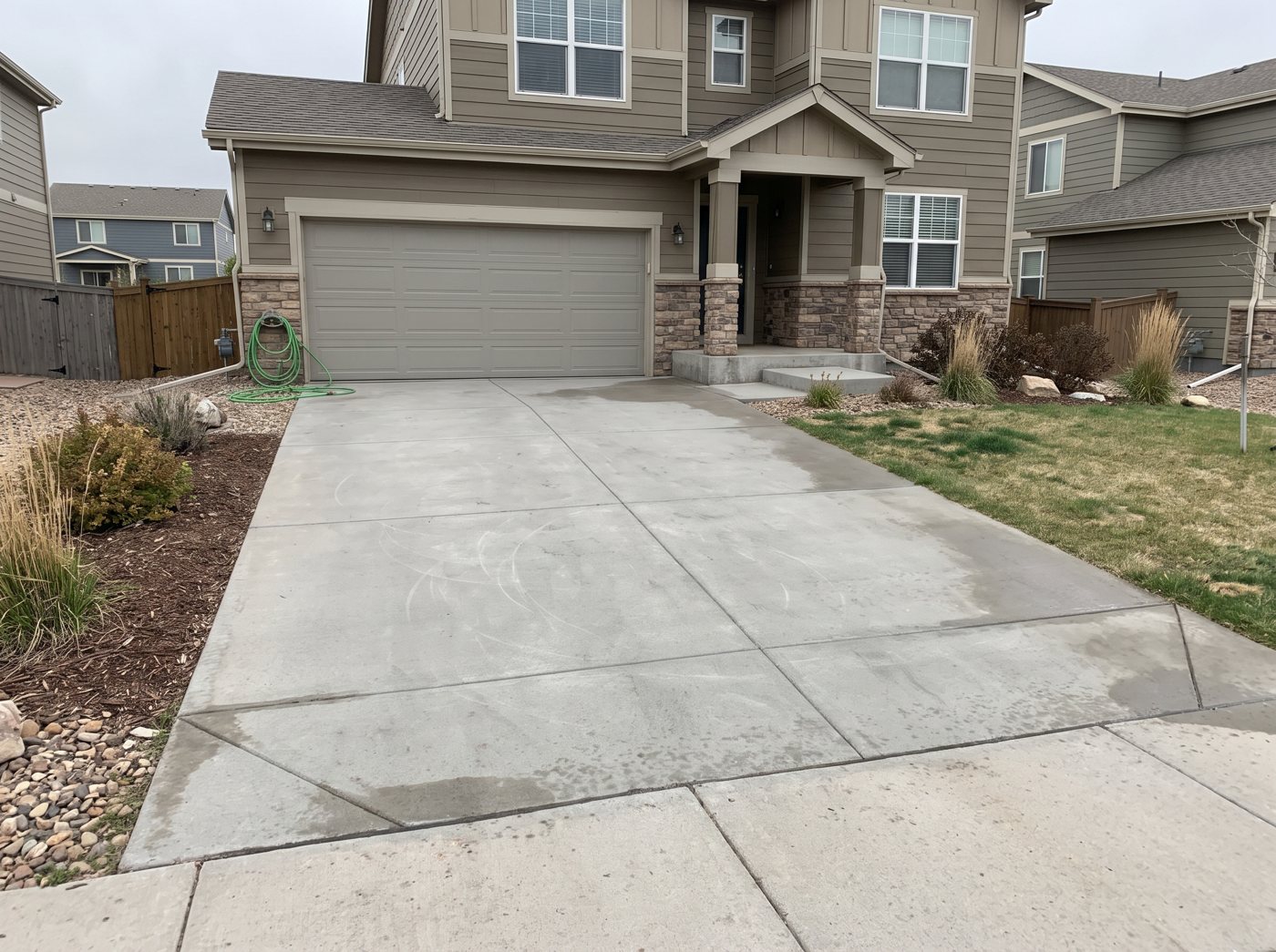
Magnesium chloride is the liquid deicer that CDOT and most cities around Denver put on the roads. It sticks to your tires and drips off in the driveway and garage. When it dries it leaves a white or gray crust. It also pulls moisture into the concrete, which makes freeze-thaw damage worse over time.
Why a hose doesn't get it
Rinsing moves some of it around, but a lot of it is down in the surface. When the concrete dries, it wicks back up and the haze comes back.
How we remove it
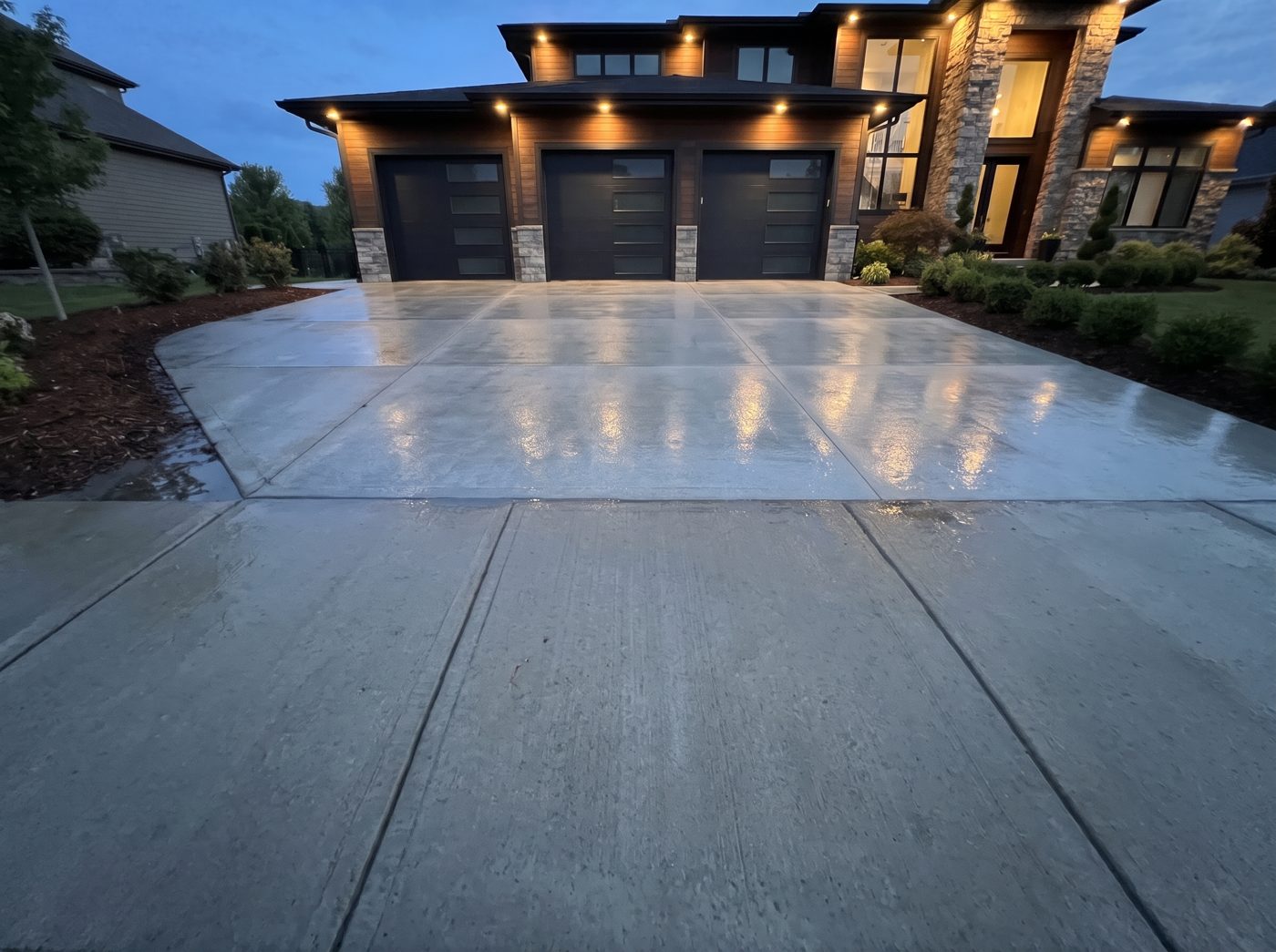
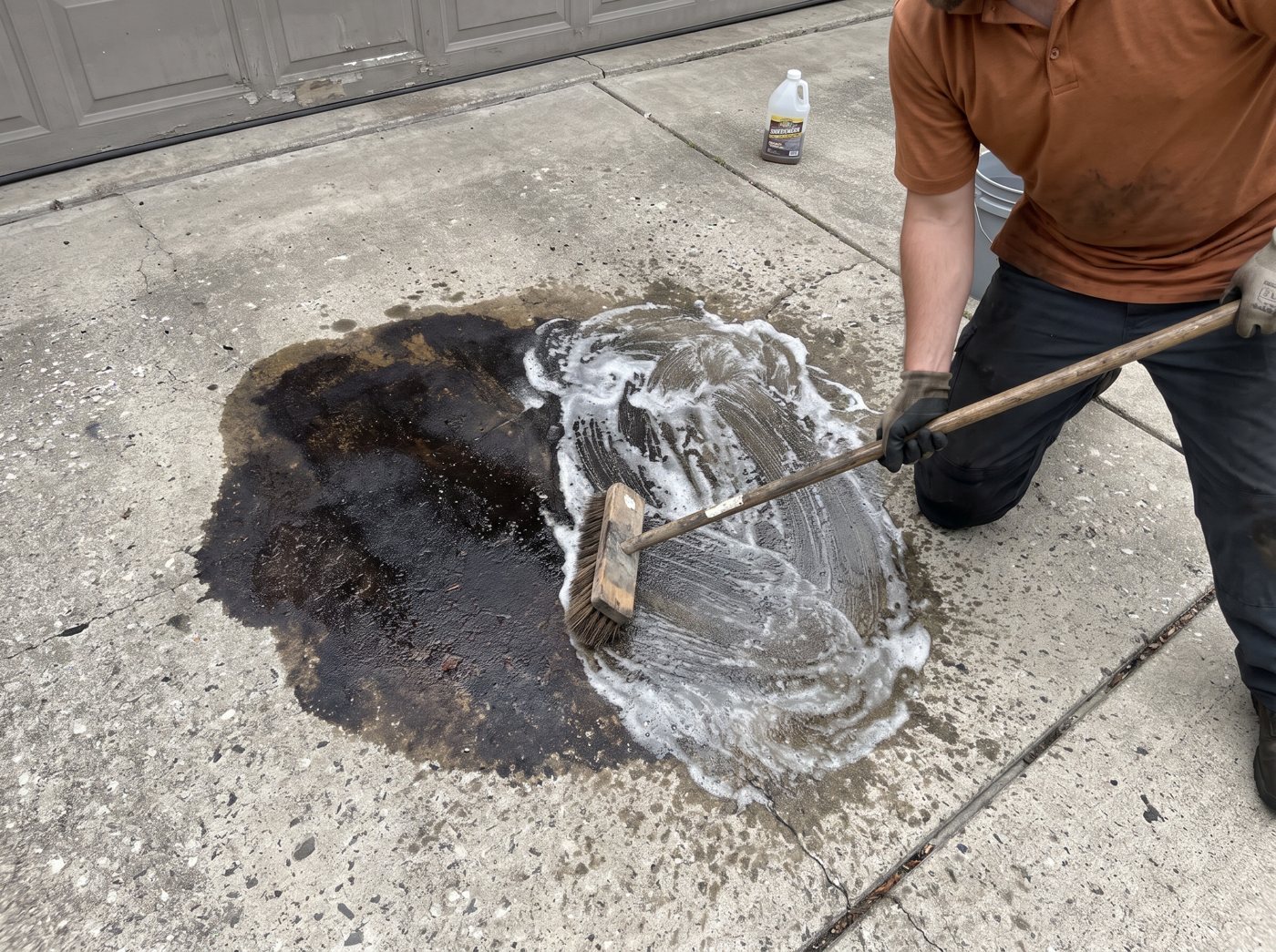
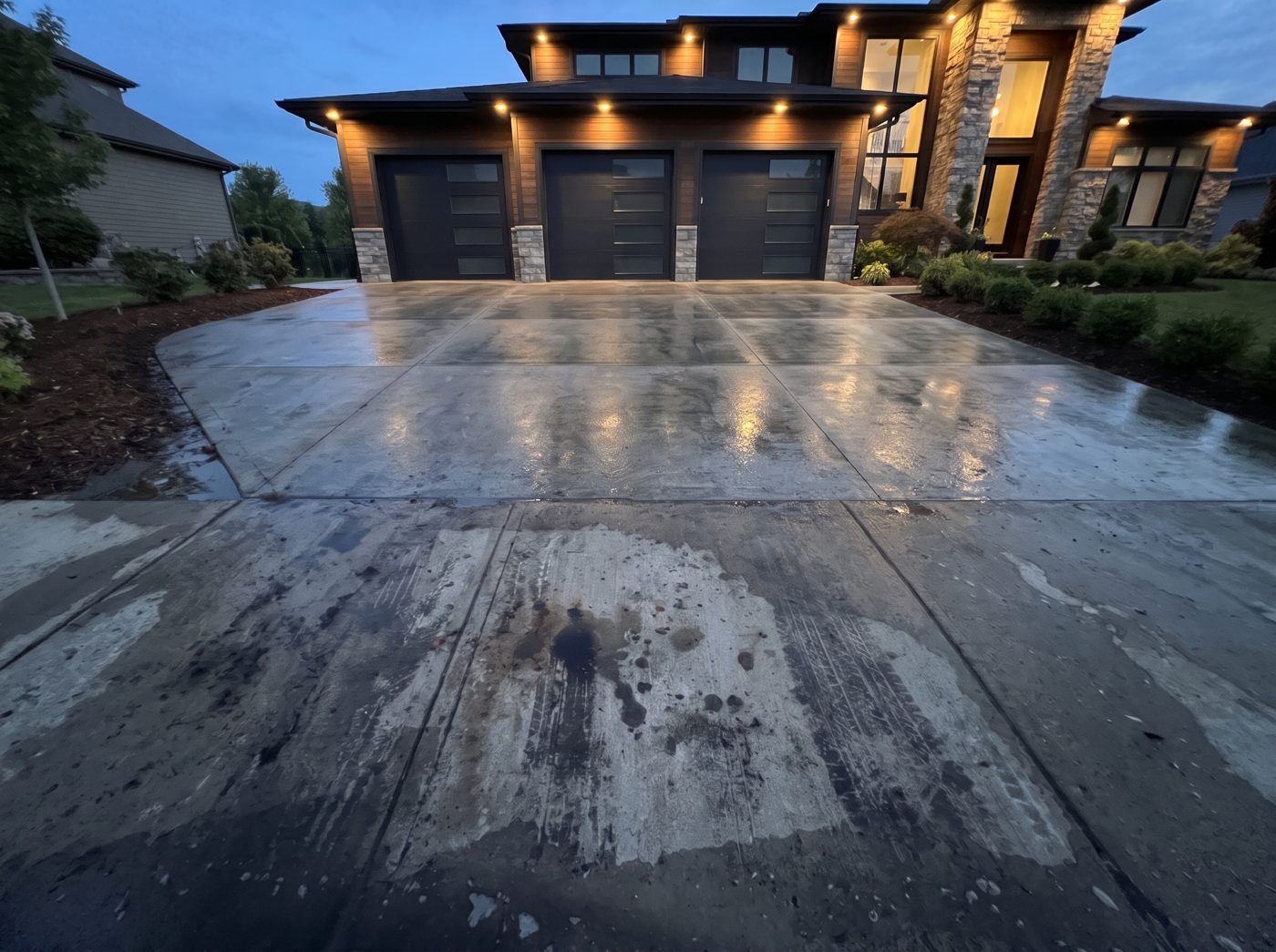
We spray a cleaner made for chloride residue and let it sit. Then we clean with hot water through a surface cleaner. Mag chloride dissolves much better in hot water, so we get more of it out with less pressure. We finish with a neutralizing rinse and a long flush so it doesn't come back as the slab dries.
Garage floors get the same process. We push the water out the door so it doesn't run under your shelves.
When to book
After the last real snow, usually April or May. Do it in February and it'll be back after the next storm.
A penetrating sealer on a dry day after the clean makes it harder for chloride to soak in, and next spring's clean goes faster.
Mag chloride questions
How long does it take?
About two to three hours for a driveway. Add an hour for a two-car garage floor.
Will the haze come back?
Not from what we removed. New haze comes with next winter's deicer, which is why a lot of people book us every spring.
Can I clean it off myself?
Store-bought cleaners help a little, but without hot water most of it wicks back up. If you try it yourself, rinse a lot more than you think you need to.
More in the FAQ, or get in touch.