The three steps
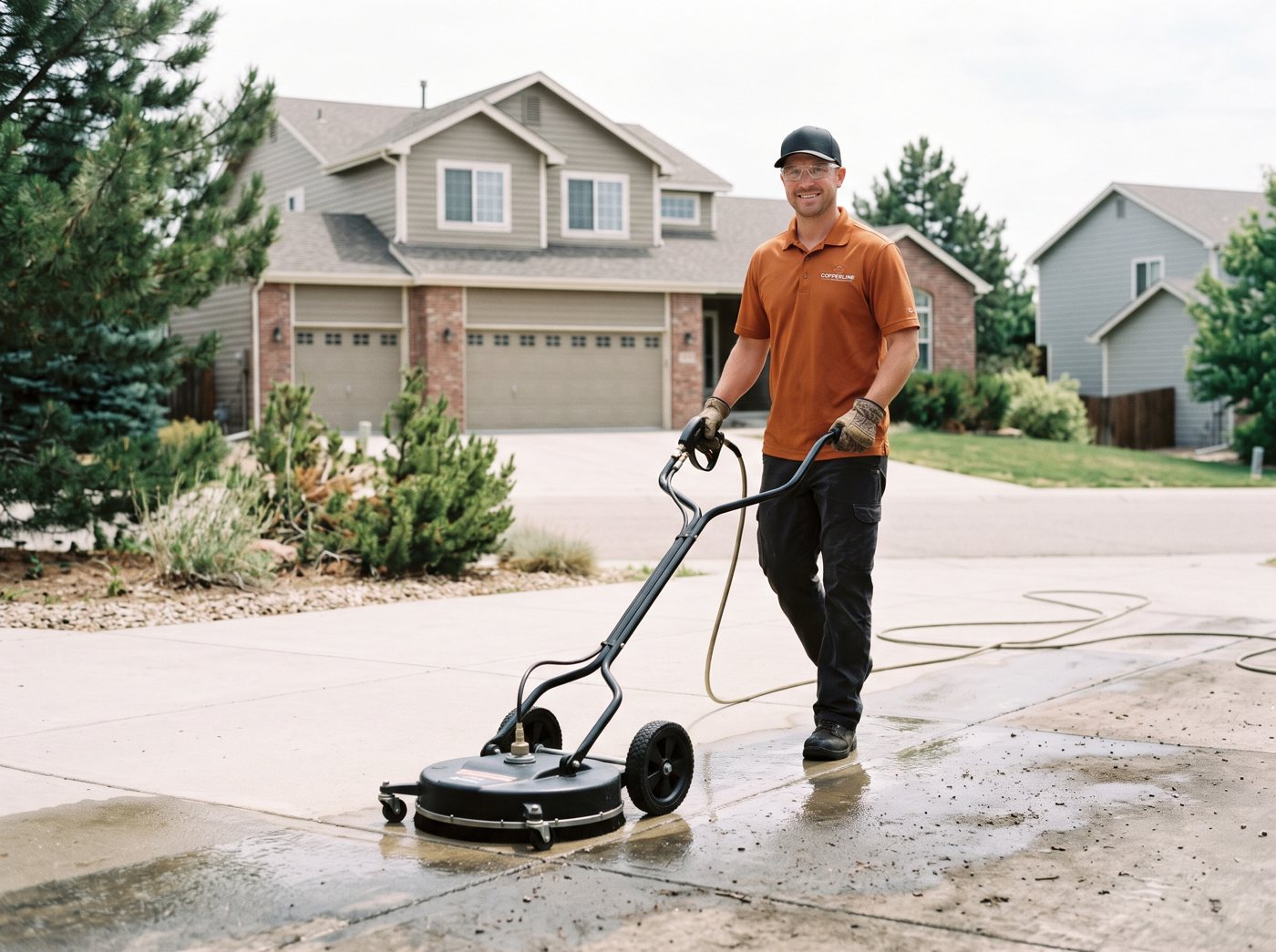
- Clean. Hot water and a surface cleaner at lower pressure so we don't blow out all the joint sand. White efflorescence gets its own cleaner.
- Re-sand. Once the pavers are dry we sweep polymeric sand into the joints, compact it, blow the extra off the surface, and mist it so it sets.
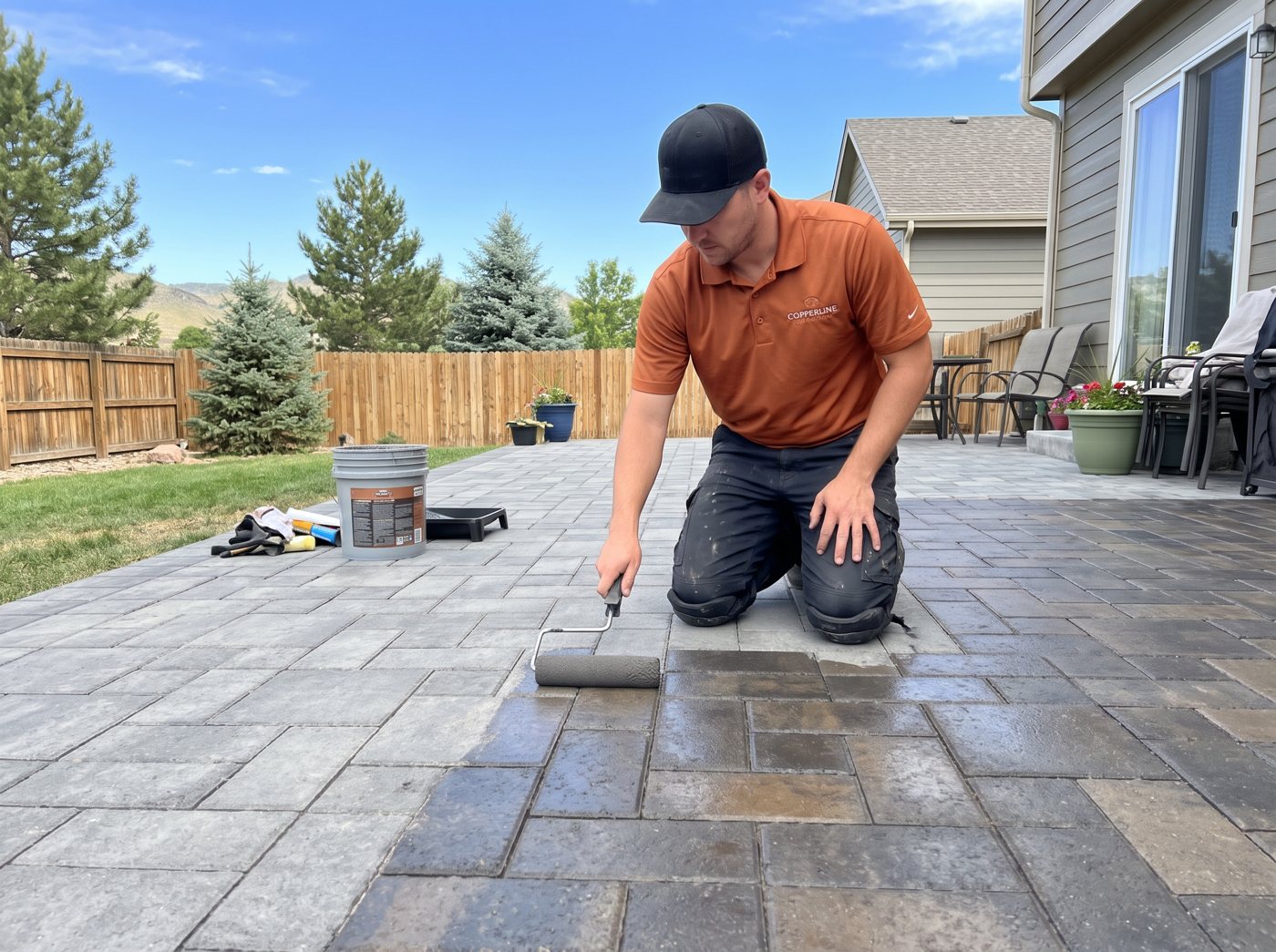
- Seal. Sealer goes on with a low-pressure sprayer and gets back-rolled so it doesn't puddle. We tape off siding and doors first.
Why it's usually two visits
Pavers have to be dry before we sand and seal. In Denver that's usually the next morning, sometimes the same afternoon in July. We'd rather come back than seal over damp pavers, which traps moisture and turns the sealer cloudy.
Picking a sealer
We carry two kinds. A natural look sealer leaves the pavers about the color they are when dry. A wet look sealer darkens them and adds some shine. Wet look shows wear sooner in high traffic spots. We can bring a sample board if you want to see both.
How long it lasts
On most patios we suggest resealing every 3 to 5 years. Paver driveways take more abuse and may need it sooner.
Paver questions
When can we use the patio again?
Walking on it the next day is fine. Give it 48 hours before furniture goes back, and 72 before you drive on paver driveways.
Will sealer make it slippery?
Natural look sealers barely change the feel. On pool decks and steps we add a grit additive to wet look sealer.
Does it stop weeds?
It cuts them down a lot. Some seeds still blow in and root on top of the sand, so pull them while they're small.
Can you seal in the fall?
Yes, through about mid-October most years. The pavers need to be dry and it has to stay above the temperature on the sealer label for a few days.
More in the FAQ, or get in touch.